
· by Michael Blair, Nashville's Fence Company
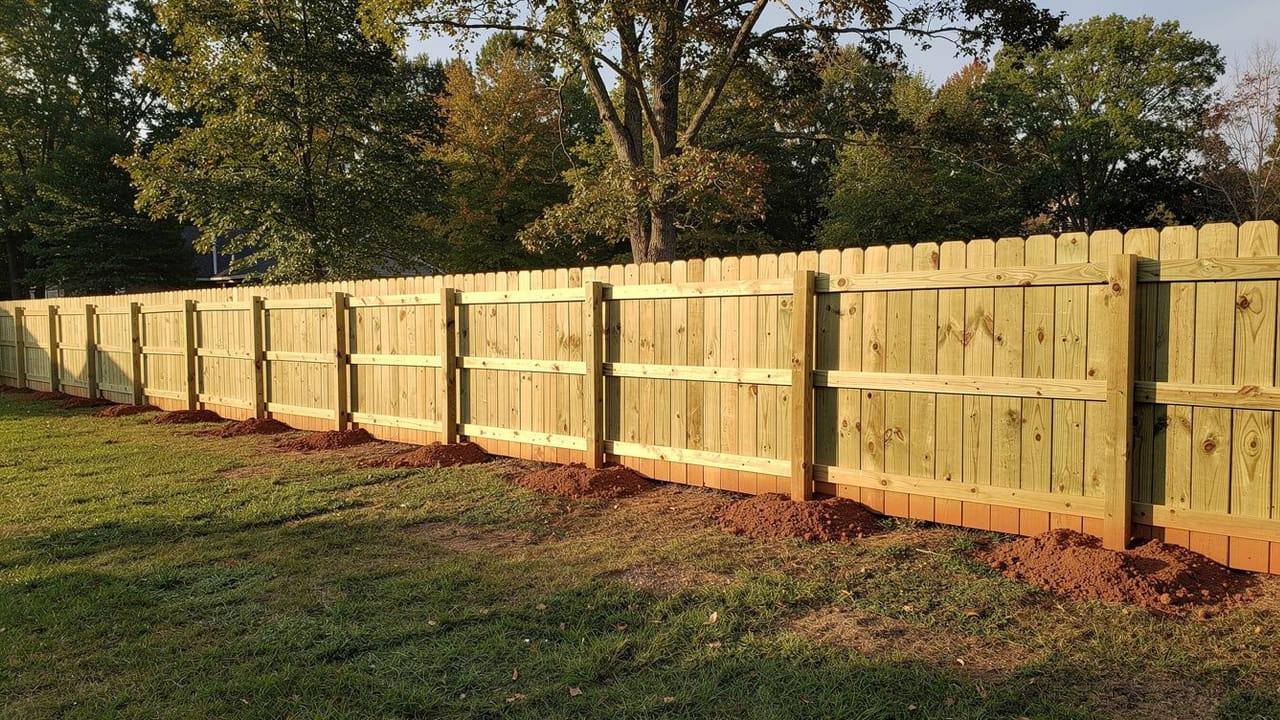
Most wood privacy fences that fail in Middle Tennessee were not built from bad lumber. They were built fast: posts dropped in shallow holes, untreated or wrongly treated wood in the ground, bright nails that streak and loosen in treated pine, rails spanning too far for the weight they carry. None of that shows on installation day. This is how our crews build a wood privacy fence in this region’s clay, part by part, and the reasoning behind each choice, so you can hold any bid you get to the same standard.
The locate call and the height you are allowed
Every fence starts with holes, and holes in Tennessee start with a locate request. The state’s damage prevention law requires anyone digging to give at least three working days’ notice before excavating, the request is free, and Tennessee 811’s FAQ is clear that a hired excavator must have the ticket in their own name. On our jobs that ticket is ours. Gas, power, cable and fiber lines often run along the same back and side property lines where a privacy fence goes, so this is not a formality.
Height is the other thing settled before a post goes in. Metro Codes’ fence page cites Zoning Code 17.12.040 (26)(A): within the first 10 feet back from the street, a solid fence can be no taller than 30 inches; from there to the front of the house the limit is 6 feet; along the sides and rear it is 8 feet, measured from finished grade. The same page says cross beams and bracing face the interior of the property, which is why the rails on a fence we build in Nashville sit on your side and the finished face looks out.
Post depth and setting in clay
There is no adopted Metro fence-post depth to point to. What there is: the NOAA engineering weather data for Nashville lists a frost depth of 22 inches, which is climate data and not a code requirement, but it tells you how far down the ground can freeze and lift a post set too shallow. For livestock fencing, UGA Extension’s Bulletin 1192 says to set wooden line posts at least 2 feet deep and to tamp the bottom 6 inches of soil well. A six-foot privacy fence catches far more wind than a horse fence, so we go deeper than that floor and deeper still at corners, ends and gate posts.
Concrete is the honest argument in fencing. The same UGA bulletin advises against concrete around wooden posts, saying it shortens post life compared with properly tamped soil. The trouble in our clay is that a solid fence acts like a sail, and tamped clay that swells when wet and shrinks in August does not hold a sail upright for long. We set privacy fence posts in concrete, but we set them so water leaves: gravel under the post end so the bottom is not sitting in a sealed cup, and the top of the concrete crowned above grade so rain sheds away from the wood instead of pooling against it. When a post does go out of plumb, the causes are usually the ones in our piece on why fence posts lean.
Treated pine and cedar, and what goes in the ground
Treated pine is sold at different retention levels, and the tag on the end of the post matters more than the species. YellaWood’s retention guide separates UC4A, ground contact general duty, for posts that are easy to maintain, from UC4B, heavy duty, for posts that are hard to replace, carry a permanent structure or sit in severe conditions. A fence post set in concrete and tied to a long run of rails is hard to replace, so we look for the heavier rating on posts. The model building code says the same thing in general terms: IRC R317.1.2 calls for wood in contact with the ground to be pressure-treated and approved for ground contact. A fence is not a structure that code governs, but the rule is a good one.
Cedar is the other common choice, mostly for the pickets and rails. It is much lighter than southern pine; the Western Red Cedar Lumber Association’s property tables list an oven-dry density of 21 pounds per cubic foot against 34 for southern pine, which makes for less weight hanging on each rail. The same source says that cedar in contact with the ground should be treated with a preservative. That is why a cedar fence from us still stands on treated pine posts.
Rails, pickets and the fasteners that hold them
Post spacing and rail count are where a bid quietly saves money. Every foot added to the gap between posts is more span the rails have to carry without sagging, and a six-foot fence needs a middle rail as well as the top and bottom ones so the pickets do not cup and twist between them. Pickets go on with a small gap, because treated pine arrives wet and shrinks as it dries, while cedar arrives drier and moves less. Butting wet pine tight is how a fence ends up with daylight between every board by the second summer.
Fasteners are the part nobody asks about. Today’s copper-based treatments corrode plain steel, and Simpson Strong-Tie’s corrosion guidance notes that ACQ-Type D tested more corrosive than copper azole, micronized copper azole or CCA-C, and tells builders to check the lumber supplier’s fastener recommendation. The IRC R317.3.1 list for treated wood is hot-dipped galvanized, stainless steel, silicon bronze or copper. On a humid Nashville fence line, the wrong nail shows up as black streaks running down each picket, then as boards working loose.
- Posts: ground-contact rated, heavy duty where they are hard to replace
- Rails: a middle rail as well as top and bottom, framing on your side
- Pickets: gapped for the wood’s moisture, not butted tight
- Fasteners: hot-dipped galvanized or stainless, matched to the treatment
Sources
- Tennessee 811, Frequently Asked Questions — Three working days’ notice before digging, free, ticket in the excavator’s name
- Metro Nashville Codes, Building Permits Central: Fence — Zoning Code 17.12.040 (26)(A) fence heights; cross beams face the interior
- NOAA NCEI, Engineering Weather Data: Nashville, TN — Frost depth of 22 inches, as climate data
- UGA Extension, Fences for Horses (Bulletin 1192) — Line posts at least 2 feet deep; concrete around wood posts not recommended
- YellaWood, Retention — UC4A and UC4B ground-contact categories for posts
- International Residential Code 2018 (Tennessee), Chapter 3, R317 — Ground-contact treated wood and approved fasteners for treated wood
- Western Red Cedar Lumber Association, Characteristics and Properties — Cedar in ground contact should be treated; density versus southern pine
- Simpson Strong-Tie, Corrosion — ACQ-Type D more corrosive than CA, MCA or CCA-C; follow supplier fastener guidance