
· by Michael Blair, Nashville's Fence Company
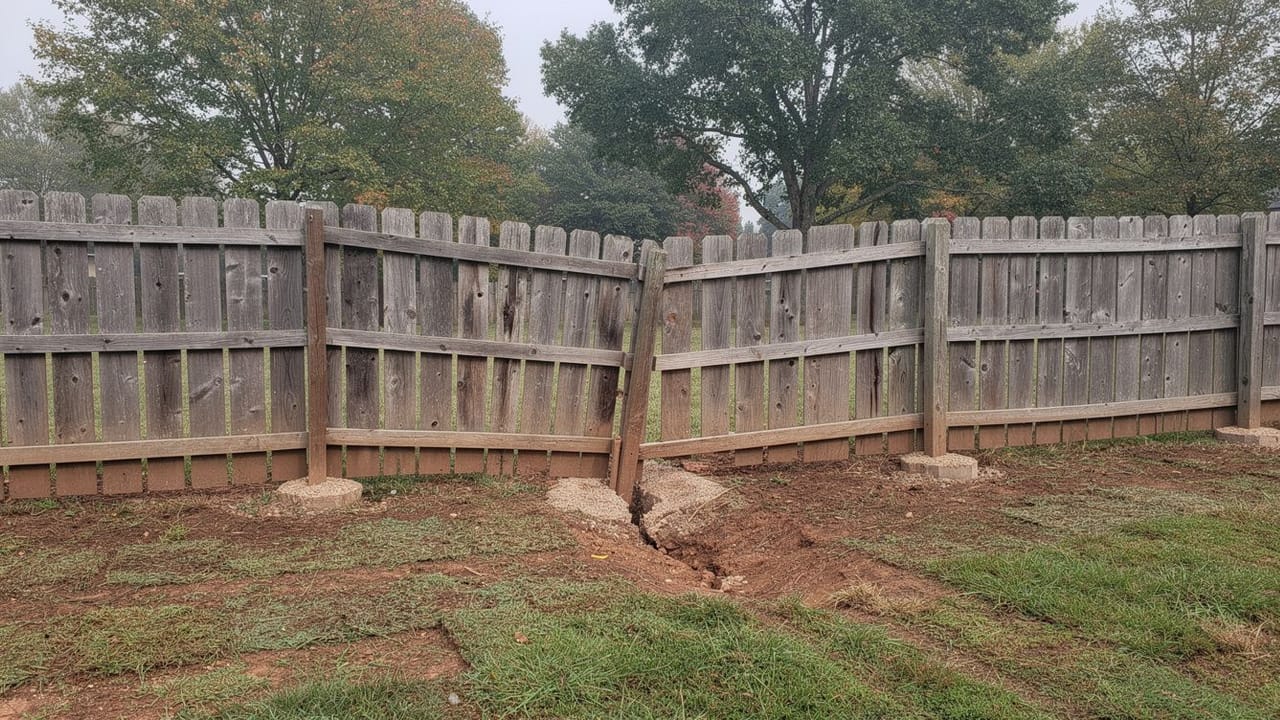
Fences fail at the posts. When a leaning fence comes to us as a fence repair call, we check each post for how deep it was set, whether water can drain away from it, and whether the wood at ground level is still sound. The answer to that last one decides whether a post can be reset at all.
Depth and the frost line
You will hear that a post has to go below the frost line, and that a third of its height belongs in the ground. Neither is written into Metro’s fence rules: the Metro Codes page on building a fence covers setbacks, heights and the materials allowed, and says residents are not required to get a permit at this time, but it sets no depth for a post. The figures we work from, and where they come from, are in our post on how a wood privacy fence is built.
That leaves depth to whoever digs the hole, and a hole that hits rock or hard clay sometimes stops early. A shallow post is the first thing we look for under a leaning section. We set corner, end and gate posts deeper and larger than the line posts between them.
Why does a fence post rot in its concrete?
Wood rots seriously only when it is wet. The USDA Forest Products Laboratory’s chapter on the biodeterioration of wood puts the line at the fiber saturation point, about 30 percent moisture, and says dried wood reaches it through rain, condensation or contact with wet ground. A fence post touches the ground for as long as it stands, so we pour the collar no wider at the top than at the bottom and finish the top sloped away from the post, where rain runs off instead of collecting against the wood.
The same chapter says a site that is dry or drained reduces the possibility of decay, and that wood which has to touch soil should be pressure treated. It is written about buildings, and we apply the same thinking to a post hole: pressure-treated posts wherever wood meets soil, and a few inches of gravel in the bottom of the hole so water under the post has somewhere to go rather than sitting against sealed end grain.
- Pressure-treated posts wherever wood meets soil
- Gravel at the base for drainage
- Concrete no wider at the top than the bottom, sloped away from the post
- Corner, end and gate posts set deeper and larger
- Bracing held until the concrete has cured
Gates are their own problem
A gate hangs its weight from the hinge post and works that post every time it opens and closes, so we never set a hinge post the way we set an ordinary line post.
We use a larger, deeper post on the hinge side, a diagonal brace in the gate itself running from the bottom hinge corner up toward the latch side, and hinges bolted through rather than screwed. If yours has already dropped at the latch, our post on a gate that sags explains how to tell a racked gate from a leaning post.
Can a leaning fence post be reset?
A sound post that has only leaned can be dug out, plumbed and set again in fresh concrete. That means new digging, and Metro’s fence page tells anyone starting a project to contact Tennessee 811 at least three working days ahead so the utilities can mark their lines.
A post that has rotted at the ground line cannot be reset. The Forest Products Laboratory chapter says decay first takes away wood’s toughness, then its bending strength, and eventually reduces every strength property seriously. It also describes what to feel for: brown-rotted wood can crack across the grain and crumble, and white-rotted wood often feels spongy. We probe each post at ground level with a screwdriver, and soft or crumbling wood there means a new post however good the rest of it looks. When one has gone, we probe the rest of the run, which has stood in the same ground for the same years, and we fix the drainage under the replacement, because the chapter’s advice for any repair is to correct the moisture that caused the decay. If you want us to look at yours, ask for a free estimate.
Sources
- USDA Forest Products Laboratory, Wood Handbook Chapter 13: Biodeterioration of Wood (Highley, 1999) — Serious decay only above fiber saturation (about 30%), reached through rain, condensation or wet ground; drainage reduces decay; pressure-treated wood for ground contact; brown and white rot signs; decay reduces toughness, then bending strength, then all strength; correct the moisture when repairing
- Metro Nashville Codes, Building Permits Central: I Want to Build a Fence — No permit required at this time; setbacks, heights and materials, with no post depth; contact Tennessee 811 at least three working days before a project
FAQ
Why Fence Posts Lean in Middle Tennessee — questions
How deep should fence posts be in Tennessee?
Metro Nashville’s fence rules cover heights, setbacks and materials but set no depth for a post, so the depth is left to the installer. The third-of-the-height figure is a rule of thumb that nothing in those rules requires. We set corner, end and gate posts deeper and larger than line posts, and we would rather keep digging than stop a hole early because the ground got hard.
Should fence posts be set in concrete?
For a privacy fence we use concrete, with a few inches of gravel under the post so water can drain and the top of the collar sloped away from the wood. The USDA Forest Products Laboratory notes that wood decays seriously only once it is wet past about 30 percent moisture, which contact with wet ground provides, so however a post is set, the aim is to keep water moving away from it.
Can a leaning fence be straightened?
If the posts are still sound, yes. They can be dug out, plumbed and reset. If a post has rotted at the ground line, resetting it puts weakened wood back in the hole, so it needs replacing. Probe at ground level with a screwdriver before deciding: wood that feels spongy or crumbles there has decayed.
How do you fix a leaning gate?
Start at the hinge post, since the gate works that post every time it swings. A sound post that has leaned can be dug out, plumbed and reset. We set hinge posts larger and deeper than line posts, brace the gate from the bottom hinge corner toward the latch side and bolt the hinges through.