
· by Michael Blair, Nashville's Fence Company
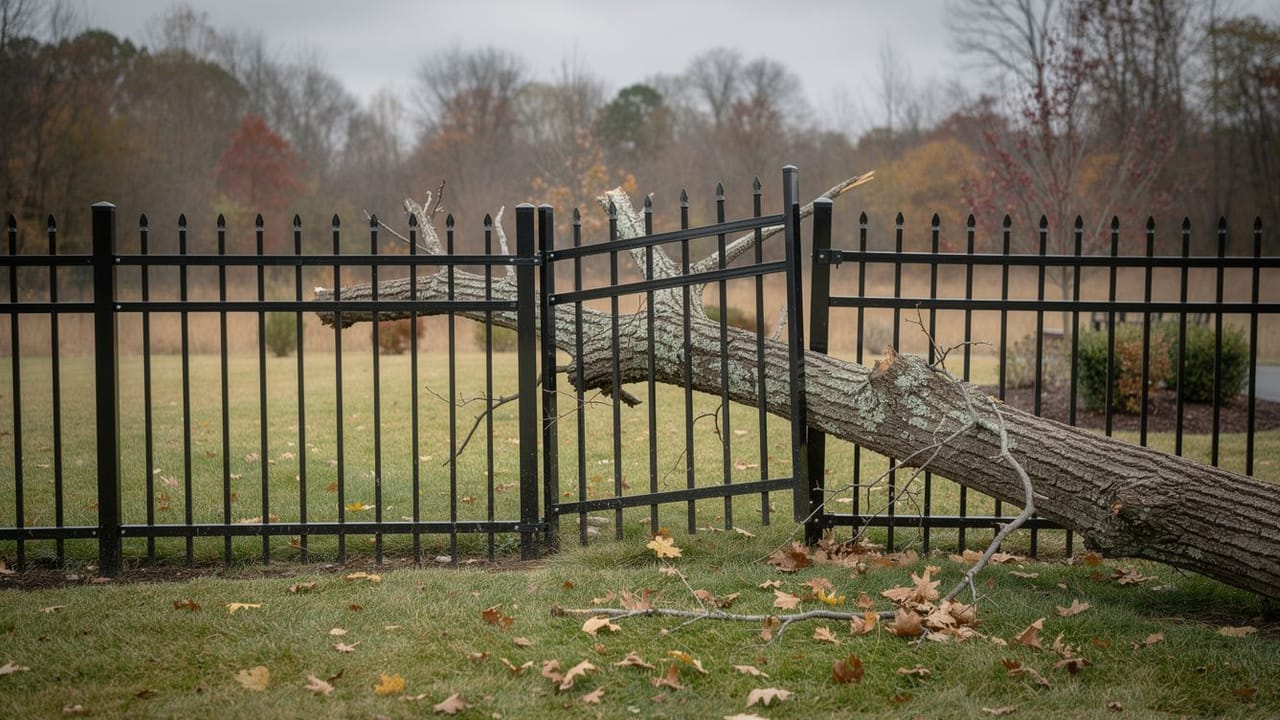
Aluminum fence holds up well, but it is not immune to a mower deck, a dropped ladder or an oak limb in a summer storm. When it gets hurt, the damage usually falls into one of two kinds. Either the finish is marked and the metal underneath is fine, or the metal itself is bent. The first is a paint job measured in minutes. The second is a parts job, and the sooner it is treated as one, the better the fence looks afterward. Here is how we tell them apart on an aluminum or ornamental fence, and what a proper replacement involves.
Can you paint over a scratch on an aluminum fence?
Yes, if the scratch is small. Digger Specialties, a maker of aluminum fence and railing, explains in its guide to touch-up paint for aluminum products that touch-up paint is for minor scuffs and scratches, the kind left when a tool hits a rail or a part gets dropped. It hides the mark and protects the look of an ornamental aluminum fence. It comes as a pen or an aerosol, and a pen is the easier of the two on a small scratch. With only an aerosol on hand, the same guide suggests spraying it onto a plate until it pools and brushing it on with a fine-bristle brush, rather than spraying the fence.
The catch is that touch-up paint is not the factory finish. The manufacturer is plain that it is not the same as the original powder coating and fades differently over the years, so a large touched area can start to stand out. That is why we keep it to the damaged spot and never respray a whole section to cover a few marks. On a color made from more than one paint, the same guide notes the base color alone is often enough.
When does a bent panel or picket have to be replaced?
A bent rail, a creased picket, a long gouge or a large dent is past what paint can fix, and the part should be replaced. That is the manufacturer’s own line in the same Digger Specialties guide: for major damage, replacing the damaged part is often best. Paint on a dent still leaves a dent, and a rail that has been forced back toward straight rarely sits true against its neighbors again.
Storm damage is the usual cause here. A limb comes down, a panel folds, and the posts on either side take some of the load. So before we price a new panel we check those posts for lean, because a post that has been pushed in the soil will put the new panel out of line too. Our post on why fence posts lean in Middle Tennessee covers what moves a post, and if the damage came from a storm, whether homeowners insurance covers a fence is worth reading before you file anything.
How is one damaged aluminum panel or post replaced?
On a bracketed system, a panel comes out without disturbing the rest of the run. The Fortress Fence installation instructions for its Estate system show the panels fastened to the posts with brackets and screws, set on a 2x4 spacer so the bottom sits 1.5 inches above the ground, and checked for level before the screws go in. A replacement panel goes in the same way. Other brands differ in their hardware, so we match the new part to what is already on your fence before ordering it.
Any piece that has to be cut to length needs care at the cut. Those Fortress instructions call for removing the metal shavings, filing the sharp edges, wiping away filings and dirt, and putting two coats of zinc-based touch-up paint on the bare aluminum, letting it dry before the bracket goes on. A post is a bigger job, because it means digging. The same instructions say to call 811 before digging post holes and to take the footing size from local building code, and Metro Codes’ fence page asks for a call to Tennessee 811 at least three working days ahead. Our fence repair service handles posts, panels and storm damage across Davidson County and the counties around it.
The replacement still has to meet Metro’s fence rules
A new panel or post goes back where the old one stood, but it is worth knowing what the fence is held to. Metro’s fence page lets an open design like aluminum stand up to 6 feet in the 10-foot strip next to the right-of-way, 6 feet in the rest of the front yard and 8 feet at the side and rear, measured from finished grade on the side with the most exposure. Cross beams and bracing face the inside of the property, no fence goes within 6 feet of a fire hydrant, and corner lots have a 35-foot visibility zone.
Two situations call for more care. In a Historic Preservation or Landmark overlay, Metro requires a Preservation Permit for fences, and an HOA’s approval does not override Metro zoning, so in those areas we check with Metro before changing anything visible. And if the fence is a pool barrier, the replacement has to keep the same spacing and gate behavior the barrier was built with, which our post on when a fence counts as a pool barrier explains. If a panel, picket or post on your aluminum fence in Brentwood, Franklin or anywhere nearby is bent or scratched, send us a photo and the brand if you know it and we will tell you which repair it needs.
Sources
- Digger Specialties, Understanding Touch Up Paint for DSI Aluminum Products — Touch-up paint for minor scratches, replacement for major damage, pens and aerosols, and why touch-up differs from powder coating
- Fortress Building Products, Estate Enclosure System installation instructions — Panels bracketed and screwed to posts 1.5 inches above ground, cut-point filing and two coats of zinc-based touch-up, call 811 and footing size by local code
- Metro Nashville Codes, I Want to Build a Fence — Open-fence height limits, interior bracing, hydrant and corner-lot rules, Preservation Permit in historic overlays, Tennessee 811 three working days ahead
FAQ
Aluminum Fence Repair: Touch Up a Scratch or Replace It — questions
Can a bent aluminum fence panel be repaired or does it have to be replaced?
A bent rail, creased picket or large dent is past what touch-up paint can fix, and the manufacturer guidance is that replacing the damaged part is often best. Paint over a dent still shows the dent. We replace the panel and check the posts on either side, since whatever bent the panel may have pushed them too.
Why does touch-up paint on my fence look different from the rest?
Touch-up paint is not the same as the powder coating applied at the factory, and it fades differently as the years go by. A small spot blends in; a large sprayed area can start to stand out. That is why we keep touch-ups to the scratched spot itself and replace a part that would need a wide patch.
Can you replace one damaged aluminum fence panel?
Usually, yes. On a bracketed system the panel is screwed to brackets on the posts, so one panel can come out and a new one go in without touching the rest of the run. It sits on a spacer above the ground and is leveled before it is fastened. We match the brand and hardware already on your fence first.
How do you fix a damaged aluminum fence post?
A bent or loosened post is replaced or reset, which means digging, so Tennessee 811 is called at least three working days ahead. The footing size comes from local building code. Once the post is set, the panels on either side are fastened back to it and leveled, and any cut ends get filed and touched up.
Should I touch up or repaint a whole aluminum fence?
Touch up the small marks and leave the rest alone. Manufacturers advise keeping touch-up paint to small areas, because it weathers differently from the powder coat and a large painted section shows. A fence with a few scuffs looks better with spot repairs; a fence with major damage needs new parts, not a repaint.