
· by Michael Blair, Nashville's Fence Company
When we’re called out to a gate that has dropped at the latch side, we check two things before anything else: whether the frame has gone out of square, leaning into a parallelogram, and whether the hinge post has moved. The answer decides the repair. It may be the brace, the post or the hinges, and a brace installed the wrong way round is near the top of that list. Rehanging and rebracing gates is part of our gate work, and most of what we look at is described below.
Which direction does a wood gate brace go?
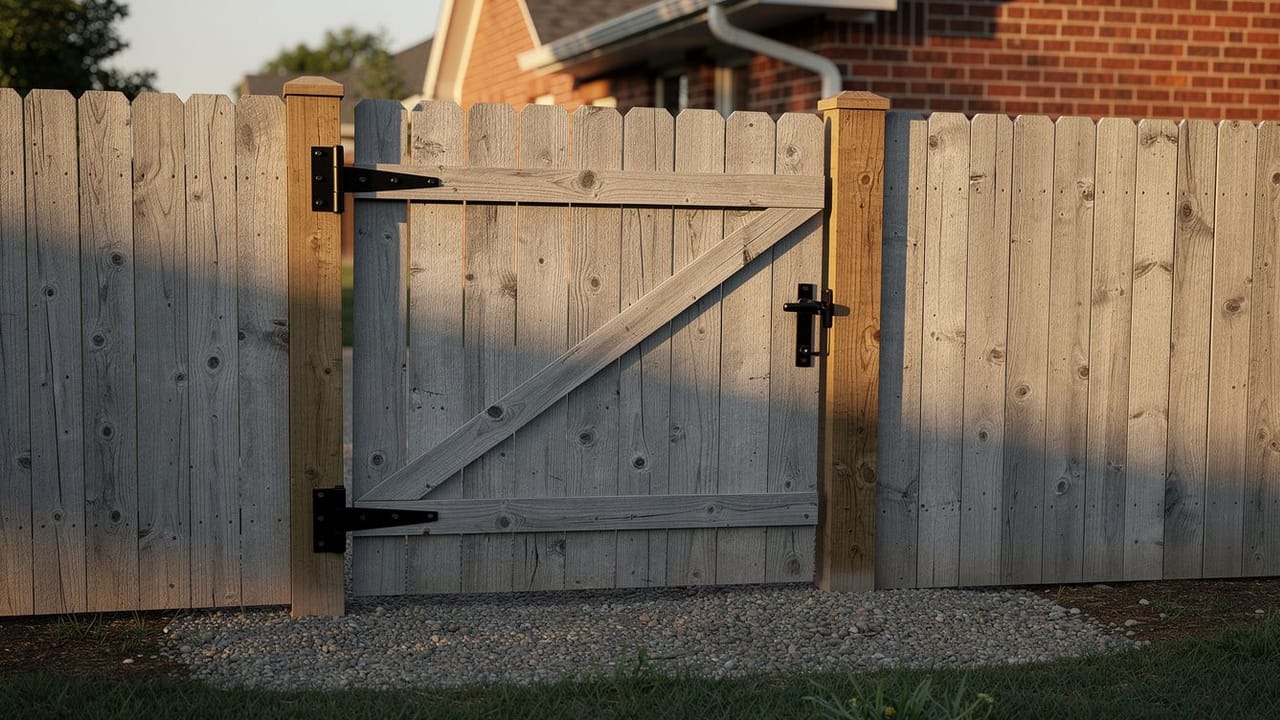
We run a wooden brace from the bottom of the hinge side up to the top of the latch side. Set that way, the weight of the latch side pushes down along the length of the board, and the brace holds the corner up by bearing on its ends.
Turned the other way, the brace is being pulled instead of pushed, and the only things holding it are the nails or screws at each end. That is why we look at the brace direction early on any gate that has dropped.
Cable braces are the opposite
A steel cable or turnbuckle brace can only pull, so we run it the other way, from the top of the hinge side down to the bottom of the latch side, where it hangs the latch corner from the hinge side. Farm fencing uses the same idea: UGA Extension’s bulletin on fences for horses braces end posts with a tensioned diagonal wire and notes that when the fence starts to sag, the wire can be tightened again.
Set backwards, a cable goes slack as the gate drops and a wood brace ends up hanging from its fasteners, so adjusting the hinges only moves the problem. A turnbuckle at least can be taken up as the gate settles.
- Wood brace: bottom hinge corner up to top latch corner
- Cable or turnbuckle: top hinge corner down to bottom latch corner
- Hinges bolted through, not screwed into end grain
- Gate post heavier than the line posts
- A turnbuckle kit pulls on the gate, not the post
How do you tell a leaning post from a sagging gate?
Check whether the gate is still square before blaming it. If the frame is square and the latch still misses, the hinge post has moved, and bracing the gate will not bring the post back to plumb; our post on why fence posts lean in Middle Tennessee covers the usual causes. If the gate only binds in damp weather, it may be neither. The Wood Handbook’s chapter on moisture and physical properties describes wood growing as it picks up moisture and getting smaller again as it loses it, and a gate that tightens and loosens with the weather is doing exactly that.
A gate post carries a load the line posts never see. Writing about farm fences, the same UGA bulletin calls for corner and gate posts at least 8 inches across the top, where line posts can be as small as 2½ inches, and says the post assembly a gate hangs on should be strong enough to hold it up without sagging. A backyard gate is lighter than a pasture gate, but we still set gate posts heavier and deeper than the rest of the fence.
Hardware that lasts
We hang wood gates on heavy strap hinges and bolt them through the post and the gate frame instead of screwing them into end grain. The USDA Forest Products Laboratory’s chapter on fastenings in the Wood Handbook puts screws in end grain at about 75 percent of the withdrawal load of screws in side grain, and it says lag screws should not go into end grain at all, because the wood can split under a sideways load.
The same chapter names stainless steel and hot-dipped galvanized nails among the ways to avoid the stains that form where steel meets certain woods in the presence of moisture. It warns that damage to a fastener’s coating gives corrosion a path to the metal underneath, and that a connector and its fasteners should be the same metal, since mixing them can speed corrosion. So we match the bolts to the hinge.
On a pool gate the latch matters more than anywhere else. The CPSC’s Safety Barrier Guidelines for Residential Pools call a gate that fails to close and latch completely the weak link in even the strongest fence, and our post on when a fence counts as a pool barrier covers the rest of what that gate has to do. If yours has dropped and you would like it looked at, ask us for a free estimate.
Sources
- USDA Forest Products Laboratory, Wood Handbook (FPL-GTR-282), Chapter 8: Fastenings — Screws in end grain average 75 percent of side-grain withdrawal load; no lag screws in end grain; stainless or hot-dipped galvanized nails against staining; damaged coatings; match connector and fastener metals
- USDA Forest Products Laboratory, Wood Handbook (FPL-GTR-282), Chapter 4: Moisture Relations and Physical Properties of Wood — Wood swells as it gains moisture and shrinks as it loses it
- UGA Extension, Fences for Horses (Bulletin 1192) — Tensioned diagonal brace wire retightened when a fence sags; corner and gate posts at least 8 inches in top diameter; a gate-bearing post assembly must hold the gate without sagging
- U.S. Consumer Product Safety Commission, Safety Barrier Guidelines for Residential Pools (Pub. 362) — A gate that fails to close and latch completely is the weak link in a pool fence
FAQ
Fixing a Gate That Sags and Will Not Latch — questions
Which way should a gate brace run?
A wooden brace runs from the bottom of the hinge side up to the top of the latch side, so the weight of the gate pushes along the board instead of pulling on the nails or screws at its ends. A steel cable or turnbuckle runs the opposite way, top hinge corner to bottom latch corner, because a cable can only pull. Set backwards, a wood brace hangs from its fasteners and a cable goes slack as the gate drops.
Why does my gate only stick in summer?
Boards gain size when they absorb moisture and lose it again as they dry, which the USDA Forest Products Laboratory’s Wood Handbook describes in its chapter on moisture, so a gate hung with a tight gap in dry weather can bind when the wood is damp and clear again once it dries out. That is seasonal movement, not sag. Trimming a gate while it is swollen can leave a wider gap than you wanted once the wood shrinks back.
Do anti-sag gate kits work?
They can, when the gate frame has racked and the post is sound. The turnbuckle pulls the latch corner back toward square and can be tightened again later as the gate settles. The kit pulls on the gate, not the post, so it will not fix a hinge post that has leaned, which is why we check whether the gate is still square first.
How do you keep a gate from sagging?
Build and hang it for its weight. A wooden brace runs from the bottom hinge corner up to the top latch corner, strap hinges are bolted through instead of screwed into end grain, and the gate post is heavier and deeper than the line posts. A turnbuckle brace, run the opposite way, can be tightened as the gate settles.