
· by Michael Blair, Nashville's Fence Company
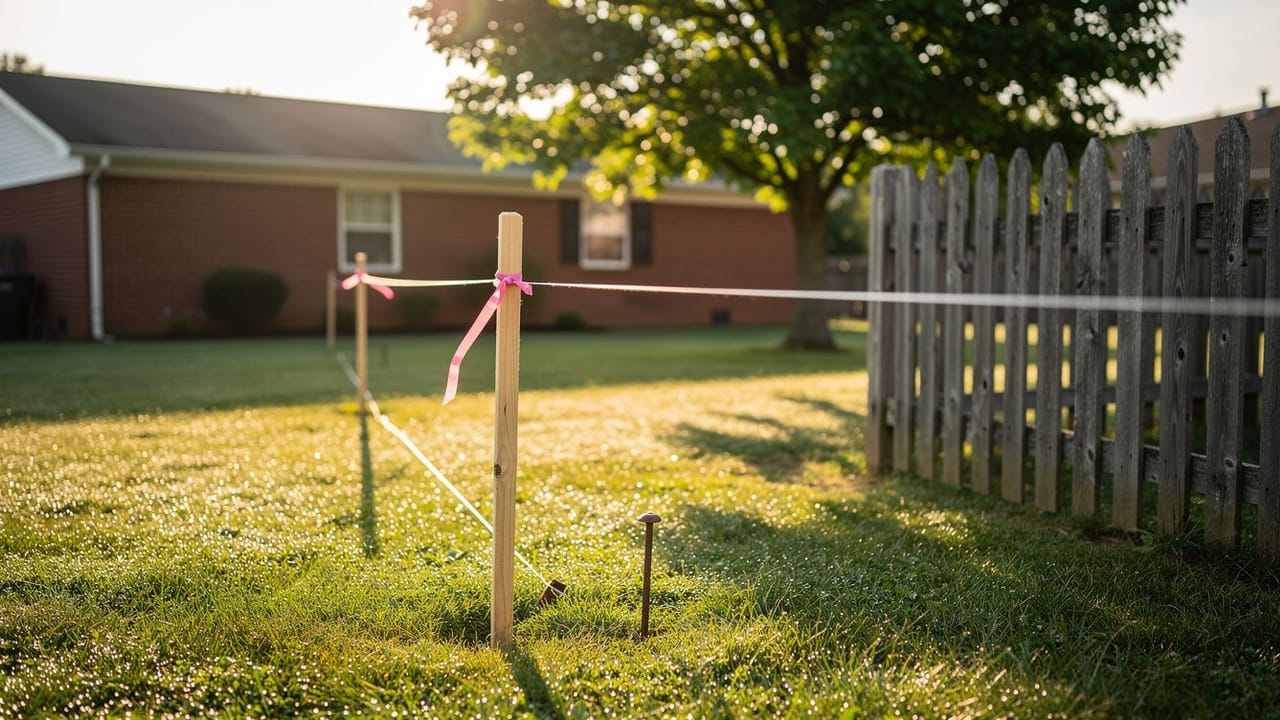
Fences get built on assumptions: an old fence line, a row of shrubs, where the mower stops. None of those is a boundary, and Metro Codes’ fence guidance says a dispute between neighboring properties over where the line sits is a civil matter, so the city will not settle it for you. On a Nashville lot, that makes the line your job to establish before the fence goes in.
Can an old fence or hedge mark the property line?
Fences, hedges and driveways are not always on the line, so we do not lay out a new run from any of them. The line is established by a survey, and in Tennessee the people who do that work are licensed land surveyors, regulated by the state Board of Examiners for Architects, Engineers, and Land Surveyors under Title 62, Chapter 2 of the state code. A survey can turn up more than the corners: Metro’s fence page notes that one may show visible evidence of easements that were never recorded, and that the Codes department keeps no easement records of its own.
We do not price surveys; that figure comes from the surveyor. What we can say is that moving a finished fence means pulling posts that are already set and building the run a second time, which is why we ask for the corners to be marked before we measure.
Setbacks and rules
Metro’s limits start at the street. In the first 10 feet back from the front property line, a solid fence can stand 30 inches tall and an open one, such as chain link or wrought iron, can reach 72 inches. The rest of the front setback, up to the face of the house, allows 6 feet, and beside or behind the house the cap is 8 feet. An alley does not count as a street for these setbacks. Height is measured from finished grade on whichever side of the fence shows more of it, which matters along a line where one yard sits higher than the next.
Corner lots are the usual trap. Metro bars fences from the 35-foot visibility zone at the corner, so a run that is legal along the back can be out of bounds where it turns toward the street; corner lots inside the Urban Zoning Overlay are exempt from that zone. Zoning overlays and homeowners’ associations may add restrictions of their own, according to the same page, and Metro points owners to its Parcel Viewer to see a lot’s zoning and any overlay. Whether the job needs a permit is covered in our post on fence permits in Nashville.
Then the ground underneath. Tennessee requires a locate request at least three and no more than ten working days before excavation, and the Public Utility Commission’s damage prevention page adds that requesting the markings costs nothing. The commission’s 811 page names installing fences among the ordinary projects that need the call. Easements along a back line are their own question: Metro allows a fence over one, but if a utility needs access, rebuilding the fence falls to the homeowner.
- Have the line surveyed before materials are ordered
- First 10 feet of the front setback: 30 inches solid, 72 inches open
- Sides and rear of the house: up to 8 feet
- Corner lots outside the UZO: nothing in the 35-foot visibility zone
- Read the HOA covenants and check the parcel for overlays
- Request locates through 811 three to ten working days before digging
How close to the property line can a fence go?
Metro sets no required distance between a fence and the neighboring property line, so a fence can run right on it or sit some way inside. Some owners set theirs a few inches inside on purpose, which keeps every post and footing on ground the survey says is theirs. Wherever it goes, the framing faces you: Metro requires cross beams and bracing to face the interior of the property, not the street or the lot next door.
The trade-off is the strip on the far side. Metro’s page is explicit that if you build off the shared line, maintaining your property on the other side of the fence is still your responsibility, and that strip is awkward to reach with a mower. Plan how you will get to it, whether through a gate at one end of the run or around the far corner.
Shared fences
A fence built jointly with a neighbor rests on an agreement between two households, and since Metro treats line disputes as civil matters, nobody at the city will referee it later. Write down who paid for what, who maintains which side and how replacement will be handled, and ask a Tennessee attorney whether the agreement should be recorded, since either house may change hands long before the fence wears out.
Do it before the fence goes up rather than when it needs replacing. Once the line is marked and the paperwork is signed, ask us for a free estimate and we will lay out the run from the survey.
Sources
- Metro Nashville Codes, Building Permits Central: I Want to Build a Fence — Line disputes are a civil matter; front, side and rear heights; 35-foot corner visibility zone and UZO exception; HOA and overlay restrictions; no distance requirement from the neighbor’s line and upkeep of the strip; cross bracing faces the interior; fences over easements; no easement records kept
- Tennessee Department of Commerce and Insurance, Board of Examiners for Architects, Engineers, and Land Surveyors — The state board that licenses land surveyors under Tenn. Code Ann. Title 62, Chapter 2
- Tennessee Public Utility Commission, Underground Utility Damage Prevention — Locate request at least three and no more than ten working days before excavation; no charge for markings
- Tennessee Public Utility Commission, 811 Before You Dig — Contact 811 before digging, including for installing fences
FAQ
Fences, Property Lines and Neighbors — questions
Do I need a survey before building a fence?
We recommend one whenever there is any doubt about the line. Old fences, hedges and driveways are not always on the boundary, and Metro treats a disagreement between neighbors over where the line runs as a civil matter, so the city will not decide it. A licensed Tennessee land surveyor can mark the line, and a survey may also show signs of easements that were never recorded.
How tall can a fence be in Nashville?
Under Metro’s zoning rules, a solid fence within 10 feet of the front property line can be 30 inches tall, or 72 inches if it is an open style such as chain link or wrought iron. From there to the front of the house the limit is 6 feet, and on the sides and rear it is 8 feet. Corner lots outside the Urban Zoning Overlay cannot have a fence in the 35-foot visibility zone, and an HOA may set tighter limits than Metro.
Can my neighbor make me move my fence?
Metro does not make that call. Its fence guidance describes a property line dispute between neighbors as a civil matter, so the answer depends on where a survey puts the line and on Tennessee law, which is a question for a Tennessee attorney. Metro has no required distance from the neighbor’s line, so setting a new fence a few inches inside your own boundary keeps the posts on your side of the survey.
Can I put a fence on the property line?
Metro allows it, since it sets no required distance between a fence and the neighboring line. The line has to be right, though, so have it surveyed first. Some owners build a few inches inside on purpose to keep every post and footing on their own ground, and they remain responsible for the strip beyond.