
· by Michael Blair, Nashville's Fence Company
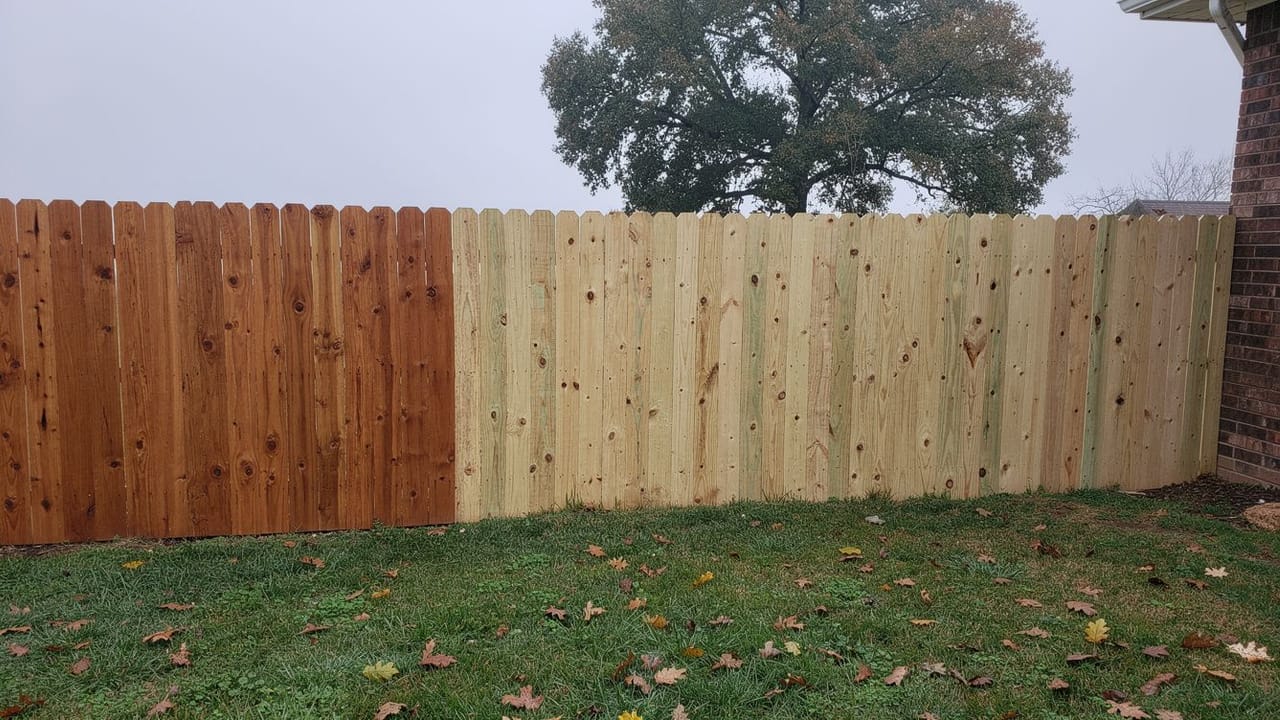
A stained fence lasts longer and looks better than a bare one. Even preservative-treated wood needs a finish once it stands in the weather, according to the Forest Products Laboratory’s Wood Handbook chapter on finishing wood, which adds that pigmented finishes retard weathering. Most of the disappointing results we see come down to timing rather than product: boards still wet from treatment are not ready for stain, and old gray wood is not ready until it has been cleaned.
Why does a new fence have to wait for stain?
Pressure-treated lumber can arrive wet. The Wood Handbook’s chapter on wood preservation explains that water goes into the wood during treatment, so the boards will dry and shrink after they are installed unless they were kiln-dried after treatment. The finishing chapter calls it extremely important that the wood accept a penetrating stain, and we do not put stain on boards that are still wet from the treating solution.
So the question is how dry the boards are, whatever their age. The same finishing chapter says wood treated with waterborne preservatives presents no major problem in finishing if it was properly redried and cleaned after treating, and the preservation chapter notes that waterborne preservatives are often chosen where the wood needs to be paintable. Oil-borne treatments such as creosote and pentachlorophenol are a different case: the handbook does not consider that wood paintable and says to let it weather one to two years before a semitransparent stain.
The wait therefore turns on how the lumber was dried and the weather since it went up, and we judge it on the boards instead of counting weeks. A splash of water is our first read. If it soaks in, the surface is taking up liquid. If it beads, the wood may still be wet, but there are other reasons it can bead: the finishing chapter notes that many treaters add a water repellent to waterborne preservatives, and that planing and drying can leave a hard, varnish-like mill glaze on the surface. Beading means we look closer before any stain goes on. The steps that come before the stain on a new fence are in our post on how a wood privacy fence is built to last here.
Preparing an older fence
Weathering changes the surface of the wood within weeks. The finishing chapter reports that the chemical changes from just a few weeks outdoors can drastically reduce how well paint sticks, and that a badly weathered, powdery surface cannot hold paint well. Penetrating stain is more forgiving, and the chapter calls semitransparent stain an excellent finish for weathered wood. Where boards have gone soft and powdery, its remedy is sanding with 50- to 80-grit paper.
A wood cleaner or brightener does not put color back into wood. The handbook is plain that cleaning cannot add color; it removes the discoloration and shows whatever is underneath, and a board weathered all the way to silvery gray gets its color back only from stain. Gray that comes from mildew is another matter, and it washes off with a commercial mildew cleaner or household bleach, so on some fences the wood that appears after cleaning is a surprise. We also keep steel wool and wire brushes off any fence that will get a semitransparent stain, as the handbook advises.
Pressure washing is where fences get damaged. The handbook rates power washing as less damaging than wet or dry sandblasting, particularly at low pressure, and that qualifier matters. We keep the pressure low and let a cleaning solution do the work, or clean by hand with a brush, which is how the chapter’s maintenance table says to take off surface dirt and mildew. If boards have split or posts have rotted, that is fence repair to sort out before any stain goes on, and we stain the repaired run to match.
- Splash test new boards, and look closer if the water beads
- Clean mildew and dirt off weathered wood, and sand it if it has gone powdery
- Keep the pressure low, or use a brush
- No steel wool or wire brushes before a semitransparent stain
- Let the fence dry out after washing before any stain goes on
- Check the label for how long the stain needs before rain
Which kind of fence stain lasts longest?
The more pigment a stain carries, the longer it protects and the less grain shows. In the finishing chapter’s words, higher pigment concentration gives greater protection against weathering but hides the natural color of the wood. Its service-life table for vertical surfaces gives a clear water repellent 1 to 3 years, a semitransparent stain 3 to 6, a solid-color stain 3 to 7 and paint 7 to 10.
Semitransparent is the usual compromise. The grain still shows, and the chapter notes that a second coat often outlasts the first because it gets into the small checks that open as the wood weathers. It also says semitransparent stain does best on rough lumber and gives less than half the service life on smooth surfaces. Solid stain hides the grain and acts much like paint, and once a fence has had it, going back is hard, because semitransparent stain does not work over a solid-color stain or old paint.
When the finishing chapter was written in 1999, latex stains did not penetrate as well as oil-based ones, oil-modified formulas did better, and work on improving them was continuing, so for a water-based product today we go by the maker’s data sheet. Whatever the base, it has to be made for exterior wood and it goes on at the label rate. More is not better: the chapter says to wipe off stain that has not soaked in within an hour, because the excess forms shiny spots that flake as they weather.
Season and interval in Middle Tennessee
Temperature limits come from the label, and we follow its minimum. For comparison, the handbook’s guidance for exterior paint is at least 50°F for latex and 40°F for oil-based, and it warns against painting on autumn days or cool spring evenings when heavy dew forms overnight. Summer is the other extreme here. The National Weather Service’s Nashville climate page puts the normal high at about 91°F in July and 90°F in August, so in those months we stain in the cooler part of the day and keep to any upper temperature the label sets.
How often to restain depends on exposure and on how much pigment went on, and the table above gives the range. The finishing chapter says the north side of a building may not need restaining nearly as often as the south side, and on a fence the south-facing runs usually come due first. For a clear water repellent the cue is the splash test: if water beads and runs off, the treatment is still working, and if it soaks in, it is time to refinish. A pigmented stain is due when the old coat has worn thin and no longer protects the wood. Going over a fence before then only piles on finish, and in stain that shows up as the same shiny, flaking spots.
If you would like us to look at your fence and tell you whether it is ready for stain, ask us for an estimate.
Sources
- USDA Forest Products Laboratory, Wood Handbook (FPL-GTR-113, 1999), Chapter 15: Finishing of Wood — Treated wood needs a finish; pigment retards weathering; redried waterborne-treated wood finishes without major problem; oil-borne treated wood weathers 1 to 2 years first; stain must penetrate; water repellent and mill glaze; weathered surfaces, cleaners, sanding, low-pressure washing, no steel wool or wire brushes; service-life table; rough vs smooth; second coat; wipe excess within an hour; paint temperatures and dew; south side restained more often; stain over paint
- USDA Forest Products Laboratory, Wood Handbook (FPL-GTR-190, 2010), Chapter 15: Wood Preservation — Water added in treatment means drying and shrinkage after installation unless kiln-dried after treatment; waterborne preservatives used where paintability is required
- NOAA National Weather Service Nashville, Nashville Climate — Normal high temperature 90.9°F in July and 90.4°F in August
FAQ
Staining a Wood Fence and When to Do It — questions
How long should a new fence weather before staining?
Until the boards have dried out from treatment. Lumber that was not kiln-dried after treatment keeps drying and shrinking once it is installed, so the wait depends on how wet it was and on the weather since, and we would not put a number of weeks on it. Lumber sold as kiln-dried after treatment has already been dried. Splash water on a board: if it soaks in, the surface is taking up liquid; if it beads, the wood may still be wet, or a factory water repellent or mill glaze may be shedding it.
Does staining a fence actually make it last longer?
Yes. The Forest Products Laboratory’s Wood Handbook says pigmented stains slow weathering by holding back the alternate wetting and drying of the wood, while the pigment limits the damage from sunlight, and that a water-repellent preservative reduces checking and splitting. Pressure treatment does not do that job: the same handbook says none of the common preservative treatments significantly changes how wood weathers, and treated wood above ground still weathers and can check and crack.
Can I stain a fence that was painted?
Not usefully. Semitransparent stain is not effective over old paint or a solid-color stain, so a painted fence has to be either repainted or stripped back to bare wood. Stripping paint is slow, difficult work, and on a full fence it is rarely worth the labor, which is one of the reasons the decision to paint a fence is harder to reverse than it looks.
Should you pressure wash a fence before staining?
Gently, if at all. The Wood Handbook rates power washing as less damaging than sandblasting, particularly at low pressure, so we keep the pressure down and let a cleaning solution do the work, or scrub by hand with a brush. Afterward the fence has to dry out before any stain goes on.