
· by Michael Blair, Nashville's Fence Company
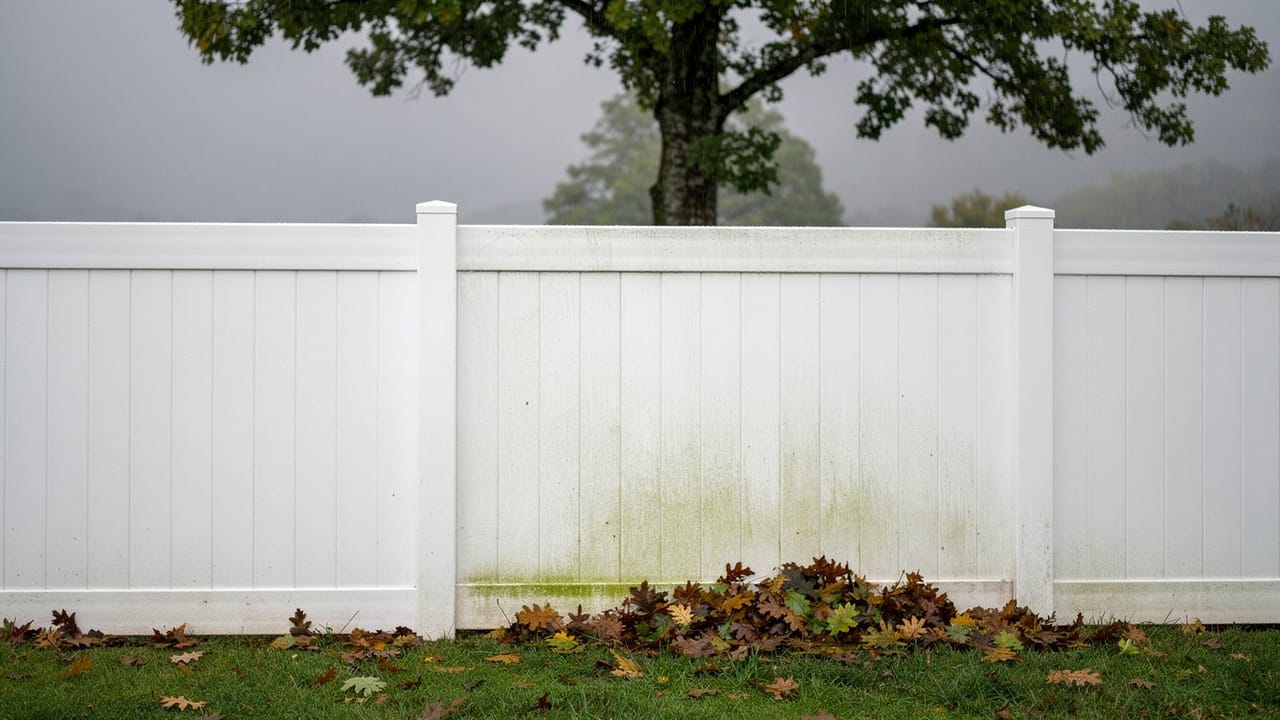
Fences around Middle Tennessee go green from the bottom up. Mildew and algae like the damp, shaded lower rails, and a humid summer gives them all the moisture they need. The common answer is a pressure washer turned all the way up, and that is where a lot of fence damage starts, because vinyl and wood fail in different ways when they are cleaned too hard. This is how each one should be cleaned, what the vinyl maker and the Forest Products Laboratory say, and what should never touch either. If panels or boards are already broken, that is a job for our fence repair crews, not a bucket.
What is the right way to wash a vinyl fence?
Start with mild soap, water and a soft brush, and work up only if that fails. Homeland Vinyl’s care guide for vinyl fencing suggests about a quarter cup of dish soap in a bucket of water for general dirt. For mold and mildew it gives equal parts vinegar and water, left on for 10 to 15 minutes and then rinsed off. Bleach comes last in that guide, and it notes that bleach can slightly abrade a white surface, so any cleaner should be tried on a small, out-of-the-way spot first.
A pressure washer is allowed on vinyl, within limits. The same guide puts the ceiling at 2,000 PSI, calls 1,500 to 2,000 PSI the ideal range, and says to spray at an angle, keep the nozzle moving and hold it at least 12 inches from the fence; more pressure than that can crack or gouge the panels. Every vinyl maker writes its own care sheet, and the warranty follows that sheet, so check yours before using anything stronger than soap. If panels are already cracked or loose, our vinyl fence page covers what we replace and how.
What should never go on a vinyl fence?
Solvents and harsh cleaners. Homeland Vinyl’s guide lists acetone, Goof Off, and cleaners that contain esters, ketones, petroleum, aromatic or chlorinated hydrocarbons, or citric (orange) acid as products not to use. Check the ingredient list on any stain, tar or sticker remover before it touches the fence.
- Acetone and products like Goof Off
- Cleaners with esters or ketones
- Petroleum-based cleaners
- Aromatic or chlorinated hydrocarbons
- Citric or orange acid cleaners
Why does a wood fence need a gentler cleaner?
Because the chemicals that kill mildew on wood also attack the wood. The Forest Products Laboratory’s guide to caring for wood shake and shingle siding is written for siding, but its cleaning advice holds for weathered exterior wood in general. It explains that mildew and algae start growing as wood ages, and that bleaching agents, household bleach or sodium percarbonate (sold as oxygen bleach), kill them but can also degrade the wood, so the mix should be as dilute as will still do the job. Of the two, oxygen bleach is the gentler; chlorine bleach tends to break down the surface into a fuzzy texture.
The method that follows from that is simple: wet the fence, apply a dilute oxygen-bleach solution, give it time to work, then rinse with an ordinary garden hose pointed down the boards. Never mix bleach with a detergent that contains ammonia, since the fumes are toxic. A USDA Forest Service paper on mildew and mildew control for wood surfaces describes the two halves of the job: remove the mildew with a suitable cleaning solution, then slow its return with a preservative that contains a mildewcide.
Pressure, stain and when cleaning turns into a repair
On wood, the Forest Products Laboratory guidance is plain that high pressure should not be needed: a hose and a dilute cleaner do the work and leave the surface intact. If the fence is getting stain or sealer next, the same guidance says to let the wood dry for several days first. The finishing steps are in our post on staining a wood fence.
A clean fence also shows what the mildew was hiding. A board that stays soft when you press it, a post that rocks at the ground, or a picket split along the grain needs a repair, not another wash. We work on vinyl and wood fences in Brentwood and across the towns around Nashville. If yours needs more than cleaning, ask us for a free written estimate.
Sources
- Homeland Vinyl, Caring for Your Vinyl (fence care guide, PDF) — Mild soap first (about 1/4 cup dish soap per bucket); equal parts vinegar and water for 10 to 15 minutes for mold and mildew; bleach as a last resort and can slightly abrade a white surface; test on a small spot; pressure washer no more than 2,000 PSI, 1,500 to 2,000 ideal, at an angle, moving, at least 12 in. away; products not to use; clean at least once a year, more in humid areas.
- USDA Forest Service, Forest Products Laboratory, FPL-GTR-202: Installation, Care, and Maintenance of Wood Shake and Shingle Siding (Dwyer et al., 2011) — Cleaning guidance for weathered exterior wood (written for siding): mildew and algae grow as wood ages; household bleach and sodium percarbonate kill them but can degrade wood, so mix dilute; oxygen bleach gentler than chlorine bleach; never with an ammonia detergent; rinse with a hose, high pressure should not be needed; dry several days before refinishing.
- USDA Forest Service, Mildew and mildew control for wood surfaces (Bussjaeger et al., Journal of Coatings Technology, 1999) — Mildew is removed with appropriate cleaning solutions and prevented by pretreating with a preservative containing a mildewcide.
FAQ
Cleaning a Vinyl or Wood Fence Without Damage — questions
Does vinegar clean a vinyl fence?
For mold and mildew, yes. Homeland Vinyl’s care guide gives equal parts vinegar and water, left on the fence for 10 to 15 minutes and then rinsed off. For ordinary dirt, mild dish soap in a bucket of water and a soft brush come first. Test any cleaner on a small spot before doing the whole fence.
Can you use bleach on a vinyl fence?
Only as a last resort. Homeland Vinyl’s guide puts bleach after soap and a vinegar solution, and notes that bleach can slightly abrade a white vinyl surface. Try it on a small spot first, rinse well afterward, and check your own fence maker’s care sheet, because the warranty follows that brand’s instructions.
How often should you clean a vinyl fence?
At least once a year, according to Homeland Vinyl’s care guide, and more often in a humid area where mold can grow. A Middle Tennessee summer qualifies, so it is worth looking the fence over through the warm months and washing it whenever mildew starts to show, rather than waiting a full year.
What kills mildew on wood?
Bleaching agents do: household chlorine bleach or sodium percarbonate, sold as oxygen bleach. Forest Products Laboratory guidance on exterior wood says both kill mildew and algae but can degrade the wood, so mix them as dilute as will still work. Oxygen bleach is the gentler choice; chlorine bleach can leave the surface fuzzy.
Should you clean a wood fence before staining?
Yes. Clean off the mildew and dirt first so the finish goes onto the wood itself. Use a dilute oxygen-bleach solution, rinse with a garden hose rather than a pressure washer, and let the wood dry for several days before staining, as Forest Products Laboratory guidance on exterior wood advises.